
Dambulla Cave Temple (Golden Temple) – Sri Lanka’s Largest Cave Temple Complex
Dambulla Cave Temple (Golden Temple) – Complete Travel Guide
Introduction
The Dambulla Cave Temple, also known as the Golden Temple of Dambulla, is one of the most extraordinary cultural and religious landmarks in Sri Lanka. Located in the central region of the island, this remarkable temple complex is built inside a massive rock formation that rises dramatically above the surrounding plains.
The temple is famous for its five sacred caves, which contain more than 150 Buddha statues and some of the most beautiful Buddhist murals in Asia. The cave walls and ceilings are covered with intricate paintings that depict scenes from the life of the Buddha, ancient Sri Lankan history, and traditional Buddhist art.
Dating back over 2,000 years, the Dambulla Cave Temple is considered the largest and best-preserved cave temple complex in Sri Lanka. Because of its historical, cultural, and religious significance, the temple was designated as a UNESCO World Heritage Site in 1991.
Visitors traveling through Sri Lanka’s Cultural Triangle—which includes Sigiriya, Polonnaruwa, and Anuradhapura—often include Dambulla Cave Temple as an essential stop in their itinerary.
Quick Visitor Information
Location: Dambulla, Central Province, Sri Lanka
Distance from Colombo: Approximately 150 km
Elevation: About 160 meters above surrounding plains
Attraction Type: Cultural & Heritage, Pilgrimage, Archaeology
UNESCO Status: World Heritage Site (1991)
Best Time to Visit: Early morning or late afternoon
Visit Duration: 1–2 hours
History of the Dambulla Cave Temple
The history of Dambulla Cave Temple dates back to the 1st century BC during the reign of King Valagamba (also known as Vattagamani Abhaya).
According to historical records, King Valagamba was forced into exile when South Indian invaders captured the Anuradhapura Kingdom. During his exile, the king took refuge in the caves of Dambulla, where Buddhist monks provided him with shelter and protection.
After regaining his throne 14 years later, the king built a magnificent temple inside the caves as a gesture of gratitude to the monks who had helped him.
Over the centuries, several Sri Lankan kings continued to expand and decorate the temple complex. The caves were gradually filled with statues, paintings, and decorative carvings, transforming the site into one of the most significant Buddhist pilgrimage destinations in the country.
The Five Sacred Caves of Dambulla
The temple complex consists of five main caves, each with unique features and religious significance.
Cave 1 – Devaraja Viharaya
The first cave, known as Devaraja Viharaya, is famous for its large reclining Buddha statue.
This statue measures about 14 meters in length and represents the Buddha entering Parinirvana, the final state of enlightenment.
The cave also contains statues of Hindu deities, reflecting the cultural connections between Buddhist and Hindu traditions in Sri Lanka.
Cave 2 – Maharaja Viharaya
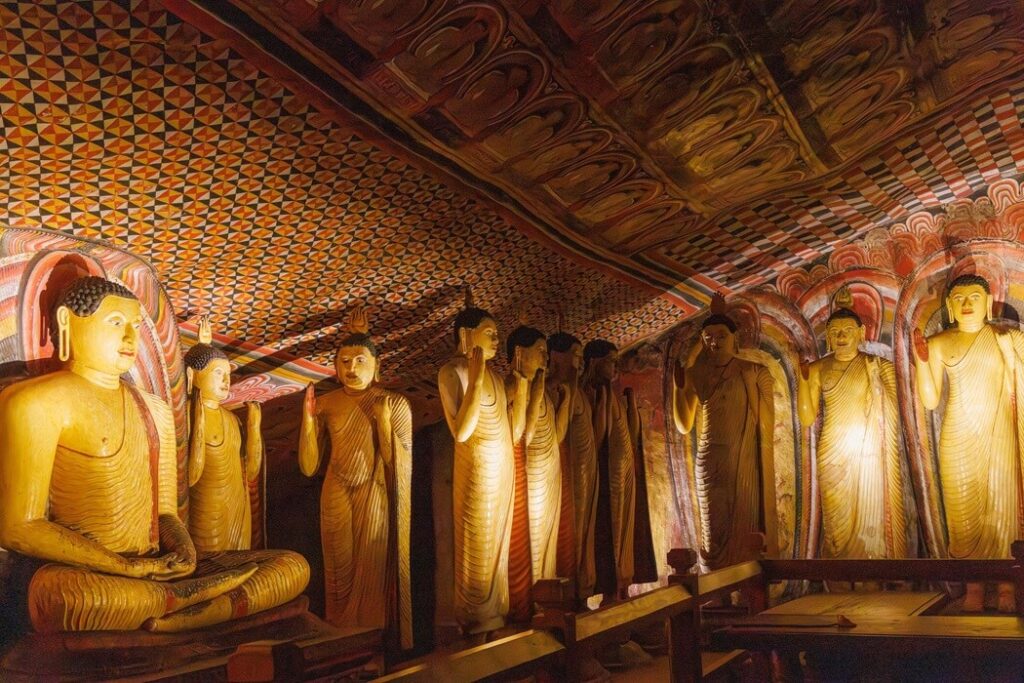
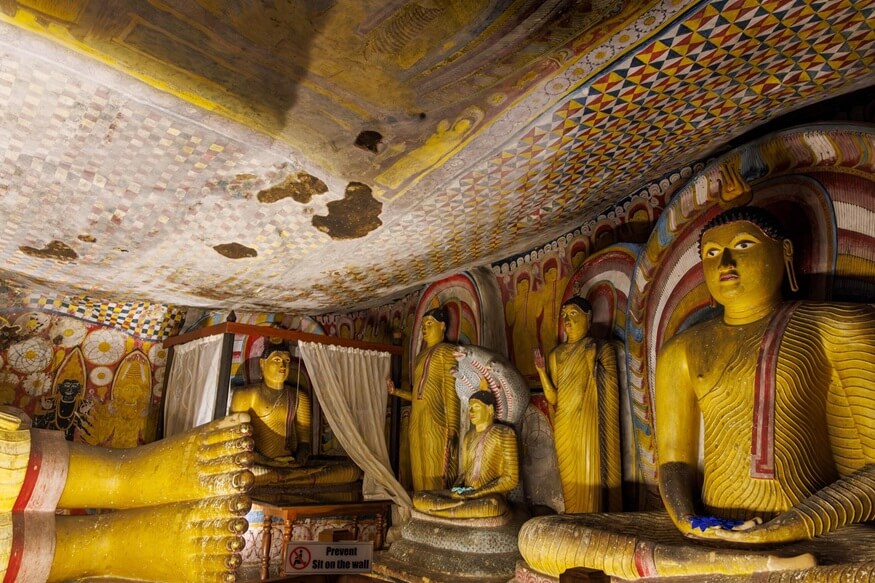
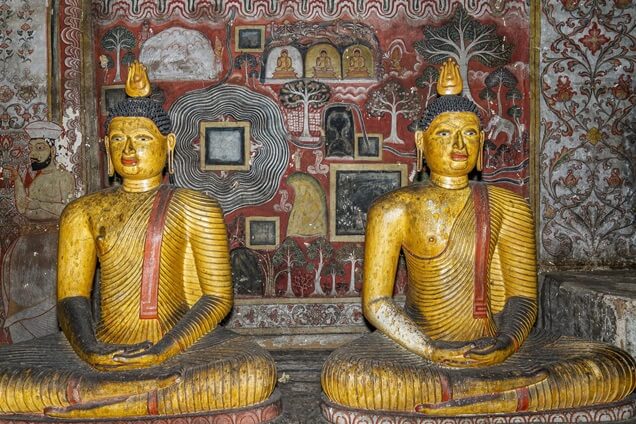
The Maharaja Viharaya is the largest and most impressive cave in the temple complex.
This cave contains:
• more than 50 Buddha statues
• statues of Sri Lankan kings
• intricate murals covering the walls and ceilings
One of the most famous statues in this cave represents King Valagamba, the ruler who originally established the temple.
The murals in this cave cover nearly the entire surface of the rock ceiling and depict important scenes from Buddhist history.
Cave 3 – Maha Alut Viharaya
The third cave was created during the Kandyan period in the 18th century.
This cave contains a large seated Buddha statue and several paintings that reflect the artistic style of the Kandyan Kingdom.
The paintings are characterized by vibrant colors and detailed patterns.
Cave 4 – Pachima Viharaya
This smaller cave contains a seated Buddha statue and several additional sculptures.
The cave also includes a small stupa, which is believed to contain sacred relics.
Cave 5 – Devana Alut Viharaya
The fifth cave was added later and contains several Buddha statues along with additional murals.
Although smaller than the other caves, it still contributes to the spiritual atmosphere of the temple complex.
Dambulla Golden Temple
At the base of the rock hill stands the Golden Temple of Dambulla, which is marked by a massive golden Buddha statue.
This modern temple complex includes:
• a Buddhist museum
• exhibition halls
• a large golden Buddha statue overlooking the entrance
The Golden Temple has become one of the most recognizable landmarks in Dambulla.
Murals and Artwork
One of the most remarkable features of the Dambulla Cave Temple is its incredible collection of murals.
The cave ceilings are covered with paintings that illustrate:
• scenes from the life of the Buddha
• historical events from Sri Lankan history
• symbolic Buddhist imagery
• decorative floral patterns
These murals span over 2,100 square meters, making them one of the largest collections of Buddhist artwork in the world.
Spiritual Importance
Dambulla Cave Temple remains an active Buddhist pilgrimage site.
Devotees visit the temple to:
• offer flowers and incense
• meditate in the cave shrines
• participate in religious ceremonies
Because of its long religious history, the temple continues to play an important role in Sri Lanka’s Buddhist tradition.
Climbing to the Cave Temple
Visitors must climb approximately 350 steps to reach the cave temple complex.
Although the climb can be slightly challenging, the views from the top are spectacular.
From the summit visitors can see:
• the surrounding plains of Dambulla
• distant mountains
• lush tropical forests
• the famous Sigiriya Rock in the distance
Monkeys are commonly seen along the staircase, so visitors should keep food secured.
Best Time to Visit
The best time to visit the Dambulla Cave Temple is during the dry season.
Ideal months include:
January
February
March
April
July
August
September
Early morning or late afternoon visits help avoid heat and crowds.
Travel Tips
Wear modest clothing covering shoulders and knees.
Remove shoes before entering the cave temples.
Bring water for the climb to the top.
Beware of monkeys along the staircase.
Visit early morning for a quieter experience.
Why Visit Dambulla Cave Temple
Dambulla Cave Temple is one of Sri Lanka’s most important cultural landmarks.
Visitors come here to experience:
• ancient Buddhist cave temples
• magnificent murals and statues
• breathtaking views from the rock summit
• over 2,000 years of Sri Lankan history
For travelers exploring the Cultural Triangle, Dambulla is an essential destination that reveals the spiritual and artistic heritage of the island.
Frequently Asked Questions
How old is Dambulla Cave Temple?
The temple dates back to the 1st century BC.
How many Buddha statues are in the temple?
The complex contains more than 150 Buddha statues.
Is Dambulla Cave Temple a UNESCO site?
Yes, it was declared a UNESCO World Heritage Site in 1991.
How long does it take to visit?
Most visitors spend about 1–2 hours exploring the caves.